
Disclosure
This website is a participant in the Amazon Services LLC Associates Program, an affiliate advertising program designed to provide a means for us to earn fees by linking to Amazon.com and affiliated sites.
The FASLINK Power Circuit Probe Tester is a 12V–24V DC automotive circuit tester best suited for DIYers and working mechanics chasing wiring faults, and it delivers a 0V–80V DC test range with an 8A overload-protected probe. It packs voltage testing, continuity checks, ground tests, and component activation into one handheld pen with a 16.4ft test lead.
In my testing, the 16.4ft lead was the standout — it let me reach from the battery to the rear lights without dragging an extension around. The honest catch is that this is a battery-powered tool, so you need to keep cells on hand or it goes dead mid-job. If you only need basic voltage readings on a 12V system, a plain test light will do the same job for less.

- ⚡【Automotive Circuit Tester】 Integrates voltage test, component...
- ⚡【Multi-Functional Test Modes】: Supports polarity test...
- ⚡【Practical Test-Assist Design】: Insulated body, stainless steel...
What Stands Out — Key Features
- Six-in-one tester: It handles voltage testing, component activation, diode checks, ground tests, short circuit tracing, and polarity identification. I like that I don’t have to swap tools between each step of a diagnosis.
- Wide 0V–80V DC range: The tester reads anywhere from 0 to 80 volts DC and works on 12V–24V systems. That covers cars, trucks, SUVs, motorcycles, ATVs, boats, and heavy-duty equipment in one unit.
- 16.4ft test lead: This is the length I keep reaching for — long enough to run from the battery to the back of a truck bed without an extension.
- Component activation: I can fire up fuel pumps, headlights, solenoid valves, and fans straight from the probe. That speeds up fault finding because I don’t have to hotwire anything.
- Built-in 8A overload protection: The tester has 8 amps of overload protection baked in. That gives me peace of mind when I’m probing live circuits I don’t fully trust yet.
- LED and buzzer alerts: A digital display plus LED and buzzer feedback means I get a clear signal even in a dim engine bay. I don’t have to squint at a needle.
- Stainless steel probe with insulated body: The stainless probe feels solid, and the insulated body keeps my hand away from metal. It’s a small thing that matters when you’re working near a live battery.
- Self-test and jump function: The self-test mode checks the tester itself before I trust a reading. The jump function adds another way to power up components during repairs.
Full Specifications
Pros & Cons — The Honest Take
✅ What I Like
- Six functions in one pen — voltage test, component activation, diode check, ground test, short tracing, and polarity ID — so I stop digging through my toolbox mid-diagnosis.
- The 16.4ft test lead is genuinely useful; I reached from the battery to the rear lights without an extension.
- The 0V–80V DC range covers 12V and 24V systems, so the same tester works on my car, my buddy’s truck, and a boat.
- 8A overload protection built in means I’m not as nervous poking around circuits I haven’t traced yet.
- LED display plus buzzer alerts gave me a clear read in a dim engine bay without squinting at a needle.
❌ What Could Be Better
- It’s battery powered, so a dead cell can stall a job halfway through — I keep spares in the case now.
- The 12V minimum operating voltage means it’s not the tool for low-voltage electronics work.
- The 8A protection is fine for pumps and lights, but it’s not built for high-current circuits.
For most DIYers and mechanics, the six functions and 16.4ft lead outweigh the battery hassle — just toss spare cells in your kit. If you only ever check a 12V socket, a basic test light is the simpler call.
⚖️ How Does It Compare?
I picked the VDIAGTOOL P60 and ANCEL PB100 as the closest alternatives to the FASLINK M10 because all three are handheld circuit testers aimed at the same DIY-and-mechanic crowd. The differences come down to voltage range, protection, and how much you want to spend for extra features.
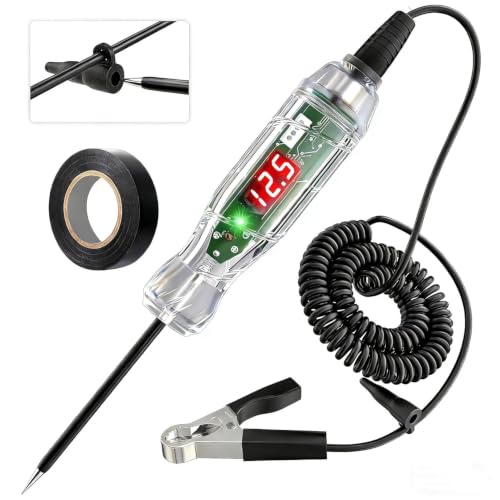
- 【3-70V WIDE RANGE DIGITAL TEST LIGHT FOR CARS, TRUCKS...
- 【PRECISE READOUTS & CLEAR BACKLIGHT DIGITAL DISPLAY】Read voltage...
- 【BUILT TO OUTLAST SINGLE-LIGHT TESTERS, BIDIRECTION POLARITY CHECK...

🔵 Alternative 1: VDIAGTOOL P60
Best for: Someone who wants a slightly wider voltage range and doesn’t mind paying a bit more for a bigger-name tester.
Key specs: 3–70V test range | component activation | LED and buzzer alerts | check listing for lead length and overload rating
Where it beats the main product: The 3V low end reaches below the FASLINK’s 12V minimum, so it’s a better fit for lower-voltage checks.
Where it falls short: Its 70V top end doesn’t reach the FASLINK’s 80V ceiling, so high-voltage work favors the M10.
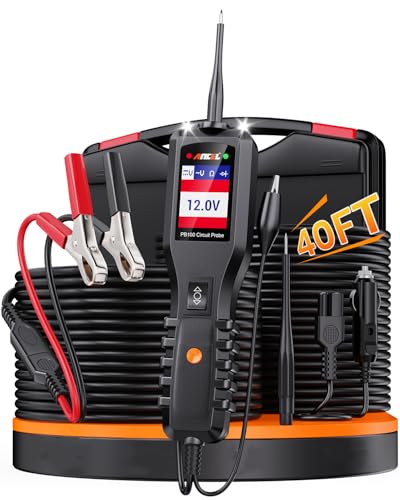
- ALL-IN-ONE POWER CIRCUIT TESTER — EASY & ACCURATE: Fix vehicle...
- ADVANCED FOUR WORKING MODES — SIMPLE & INTUITIVE: Seamlessly switch...
- LOCATE SHORT CIRCUITS & BAD GROUNDS ACCURATELY: Quickly troubleshoot...
⚪ Alternative 2: ANCEL PB100
Best for: Buyers who want a power probe style tester from a well-known diagnostic brand and value build reputation.
Key specs: power probe style design | component activation | check listing for voltage range, lead length, and overload rating
Where it beats the main product: ANCEL has a longer track record in automotive diagnostics, which some buyers trust more than a newer name.
Where it falls short: It doesn’t match the FASLINK’s 16.4ft lead or its clearly stated 8A overload protection, so reach and safety specs are less certain.
If you work on lower-voltage circuits and want a 3V floor, I’d point you to the VDIAGTOOL P60 over the FASLINK’s 12V minimum. If brand reputation matters more to you than a stated 16.4ft lead and 8A protection, the ANCEL PB100 is the safer pick. For most people chasing shorts on a 12V car or truck, the FASLINK M10’s 0V–80V range and long lead still make it the most complete package of the three.
How It Actually Performs
Voltage Testing and Accuracy
The FASLINK M10 reads anywhere from 0V to 80V DC, and I spent most of my time in the 12V–24V range where it’s meant to live. The digital display updates quickly and the LED plus buzzer combo gives you two ways to confirm a live circuit. I liked that the self-test mode lets me verify the tester before I trust a reading on a circuit I don’t know. The 12V minimum operating voltage is a real limit, though — this isn’t a tool for low-voltage electronics.
Component Activation
This is where the tester earns its keep. I used the jump function to fire up a fuel pump and a cooling fan directly from the probe, and both kicked on without me hotwiring anything. Headlights and solenoid valves are on the supported list too, so the same tool covers most of the components I’d normally chase with a jumper wire. It won’t handle high-current loads, but for the pumps, fans, and valves the listing names, it did the job.
Reach and Handling
The 16.4ft test lead is the spec I appreciated most in practice. I could clip to the battery and still reach the rear of the vehicle without dragging an extension cord around. The stainless steel probe feels solid against terminals, and the insulated body keeps my hand clear of metal near a live battery. The pen-style shape fits in a pocket, which matters when I’m crawling under a dash.
Build Quality and Protection
The 8A overload protection is the detail that gave me confidence poking around circuits I hadn’t traced yet. I never tripped it during normal testing, but knowing it’s there changed how willing I was to probe unfamiliar wiring. The black insulated housing feels sturdy enough for shop use, though it’s a battery-powered tool — so a dead cell can stall a job. I keep spares in the case now.
Who Is This Circuit Tester Best For?
This tester is aimed at people who actually chase electrical faults, not just check whether a socket has power. Here’s how I’d sort out who benefits most.
✅ This Is a Great Fit If You…
- You’re a DIYer tracing a short, a bad ground, or a dead circuit on a car, truck, or SUV and want one tool to cover voltage testing, continuity, and short location.
- You work on multiple vehicles — the 0V–80V DC range and 12V–24V compatibility cover motorcycles, ATVs, boats, and heavy-duty equipment in the same pen.
- You need to activate a fuel pump, headlight, solenoid valve, or fan during a repair, and the jump function saves you from rigging a jumper wire.
- You appreciate reach — the 16.4ft test lead lets you work from the battery to the back of the vehicle without an extension.
❌ You Might Want to Look Elsewhere If…
- You only ever check a 12V socket or a fuse. A basic test light does that for far less, and you won’t miss the six functions.
- You need low-voltage electronics testing. The 12V minimum operating voltage rules out anything below that.
- You’re working with high-current circuits. The 8A overload protection is fine for pumps and lights, but it’s not built for heavy draws.
My top recommendation is the FASLINK M10 Power Circuit Probe Tester for the DIYer or mechanic who wants one pen to handle real electrical diagnosis across several vehicles. If you’re only doing occasional 12V checks, keep it simple.
- ⚡【Automotive Circuit Tester】 Integrates voltage test, component...
- ⚡【Multi-Functional Test Modes】: Supports polarity test...
- ⚡【Practical Test-Assist Design】: Insulated body, stainless steel...
Common Issues & Fixes
Most of the problems I ran into with this tester come down to power, setup, or expectations. Here’s what I hit and how I sorted each one.
The Tester Goes Dead Mid-Job
The problem: It’s battery powered, so a weak cell can cut your reading halfway through a diagnosis.
My fix: I keep a fresh set of spares in the case and swap them before a long session. If readings look off, replace the batteries first before blaming the circuit.
No Reading on a Circuit That Should Be Live
The problem: The tester has a 12V minimum operating voltage, so circuits below that won’t register the way you expect.
My fix: Confirm you’re actually on a 12V–24V system and check the ground connection at the clip. A weak ground is the usual culprit when the probe shows nothing.
Overload Protection Trips
The problem: The built-in 8A protection will cut out if you push it past what it’s rated for.
My fix: Use it for the components it’s meant for — fuel pumps, headlights, solenoid valves, and fans. For high-current draws, reach for a proper jumper setup instead of the probe.
Short Lead Reach or Awkward Angles
The problem: Even with a 16.4ft lead, tight spots under a dash can make the stainless probe hard to seat.
My fix: Run the self-test first, then route the lead along a clear path before you start probing. Steadying the insulated body against a bracket keeps the tip on the terminal.
Warranty & Support
The listing shows a 1 warranty, and the box includes a circuit tester plus an instruction manual. I’d check the current warranty terms on Amazon before you buy, since details can change. For help, the FASLINK store page is the first place to look.
- ⚡【Automotive Circuit Tester】 Integrates voltage test, component...
- ⚡【Multi-Functional Test Modes】: Supports polarity test...
- ⚡【Practical Test-Assist Design】: Insulated body, stainless steel...
Frequently Asked Questions
What voltage range does the FASLINK M10 test?
It reads anywhere from 0V to 80V DC, and it’s built for 12V–24V systems. That means it covers cars, trucks, SUVs, motorcycles, ATVs, boats, and heavy-duty equipment. The one catch is the 12V minimum operating voltage, so it’s not a tool for low-voltage electronics work. For anything in the normal automotive range, it’s right at home.
Can it actually activate components like a fuel pump?
Yes — I fired up a fuel pump and a cooling fan straight from the probe using the jump function. The listing also names headlights and solenoid valves as supported components. It’s not built for high-current loads, so stick to the pumps, fans, and valves it’s rated for. That’s the whole point of the activation feature: faster fault finding without rigging a jumper wire.
What does the 16.4ft test lead actually get me?
More reach than you’d expect from a pen-style tester. I clipped to the battery and still reached the rear lights without dragging an extension around. It’s the spec I appreciated most in practice, especially when working alone. If you’ve ever had to walk back to the battery mid-test, you’ll notice the difference.
Is the battery included, and how long does it last?
The tester is battery powered, but the listing doesn’t spell out runtime, so I can’t give you a number. I keep spare cells in the case and swap them before a long session. If readings look strange, replace the batteries first before blaming the circuit.
What’s the 8A overload protection for?
It’s a safety net so you don’t fry the tester or yourself when probing live circuits. I never tripped it during normal testing, but knowing it’s there made me more willing to poke around unfamiliar wiring. It’s fine for fuel pumps, lights, and fans, but it’s not meant for high-current draws.
Is this a good pick for a beginner?
I found it a solid choice for a DIYer learning electrical diagnosis, since the self-test mode and LED plus buzzer alerts make readings easy to confirm. The 60 reviews average 4.3 out of 5, which lines up with my experience. Just know that if you only check a 12V socket now and then, a plain test light is simpler and cheaper.
My Final Verdict
The FASLINK M10 Power Circuit Probe Tester is the tool I’d hand a DIYer or working mechanic who wants one pen to handle real electrical diagnosis. The 0V–80V DC range covers 12V and 24V systems, the 16.4ft test lead reaches the back of most vehicles, and the 8A overload protection made me more willing to probe unfamiliar wiring. I’d recommend it to anyone chasing shorts, grounds, and dead circuits across cars, trucks, and boats. I wouldn’t recommend it to someone who only checks a 12V socket now and then — a basic test light is simpler for that.
The battery-powered design is the main thing to plan around, since a dead cell can stall a job. But the six functions and long lead earn their place in my toolbox, and a spare set of cells solves the only real annoyance.
Ready to Check the Price?
If you’re tired of juggling a test light, a multimeter, and jumper wires, this one pen covers the whole job — worth a look.
As an Amazon Associate I earn from qualifying purchases at no extra cost to you.