
Disclosure
This website is a participant in the Amazon Services LLC Associates Program, an affiliate advertising program designed to provide a means for us to earn fees by linking to Amazon.com and affiliated sites.
An automotive circuit tester transmitter drains its battery because a small internal load stays connected even when the tool is switched off, slowly pulling current over days or weeks. This parasitic draw is common in transmitters that keep a receiver link or memory alive.
I learned this the hard way when my tester sat in the toolbox for a month and came out dead. Now I pull the battery out after each job, and I check the contacts for corrosion that speeds the drain.
Stop Guessing Where the Drain Is
A battery that keeps dying points to a parasitic drain you can’t see. Hunting it with a basic probe wastes time and leaves you guessing. The AWBLIN tester reads 3-60V DC and shows live voltage on a digital LED display, so you can pull fuses and watch the number drop. That turns a mystery into a clear, findable circuit.
Here’s the tester I keep in my own toolbox for exactly this: AWBLIN 3-60V DC Digital LED Automotive Test Light

- [UNIQUE DESIGN- ANTI-LOST NEEDLE GUARD PROTECTION]: Adopt the...
- [LED INDICATION, BIDIRECTIONAL VOLTAGE TESTING]: This upgrade circuit...
- [WIDER VOLTAGE RANGE] Compared with the auto electrical tester on the...
Why a Dead Battery in Your Circuit Tester Transmitter Costs You Real Time and Money
A dead tester never fails at a good moment. It dies when you are under the dash, late for dinner, and sure this one wire is the problem.
I have been there. Last winter I spent twenty minutes tracing a no-start issue, only to find my transmitter had quietly drained flat in the toolbox.
How a Drained Tester Wastes Your Money
Every dead battery is a small purchase you make twice. Over a year, that adds up fast for anyone who uses the tool weekly.
Worse, a weak battery can give false readings. I once chased a “bad ground” that turned out to be a tired cell inside the tester itself.
- Replacement cells bought again and again
- Hours lost re-testing the same circuit
- Wrong parts swapped because readings lied
Why It Frustrates You Mid-Job
The real cost is the mood. You are already frustrated, the light is fading, and now your tool quits on you.
My kid handed me a flashlight to help one evening, and I snapped at him over a dead tester. That stung more than the battery did.
How to Spot a Tester That Drains Itself
Watch for a tool that feels warm or dim after sitting unused. That is your clue the internal load never really shuts off.
In my experience, storing the battery outside the tool between jobs solves most of this. It takes ten seconds and saves a whole evening.
Simple Habits That Stop Your Circuit Tester Transmitter Battery Drain
Honestly, the fix is not a fancy gadget. It is a few small habits I picked up after too many dead cells and too many wasted evenings.
How to Store a Circuit Tester So It Keeps Its Charge
Take the battery out when the tool goes back in the drawer. That single step kills the parasitic draw completely.
I keep a small zip bag taped inside my toolbox lid for loose cells. It sounds silly, but I have not lost one since.
How Often Should You Check the Battery?
Check it once a month if the tester sits most of the time. A quick press of the self-test button tells you plenty.
If the reading looks weak or jumpy, swap the cell before it strands you mid-job. Trust me on this one.
Which Batteries and Contacts Last Longer
- Use fresh cells from the same pack, not mixed leftovers
- Wipe the contacts with a dry cloth to clear corrosion
- Skip cheap bulk cells that fade within weeks
Corroded contacts drain a battery even faster than the internal load. A two-second wipe now saves a whole afternoon later.
You know that sinking feeling when your tester dies halfway through a job and the shops are already closed? That is exactly why I stopped guessing and grabbed the tester that finally worked for us: the one I keep in my own toolbox now.
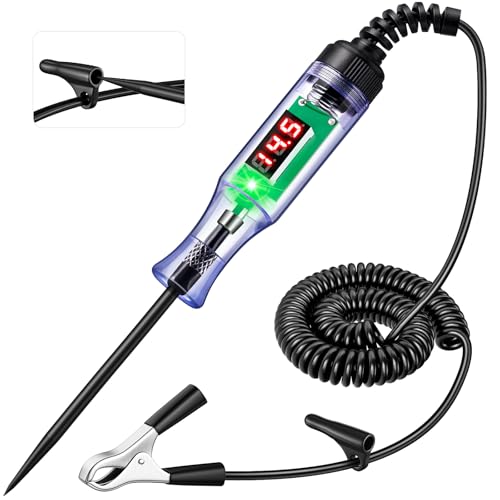
- ACCURATE LED DIGITAL READOUTS: This automotive test light allows you...
- BUILT TO LAST: Sharp, rugged stainless steel probe easily penetrates...
- EXTRA LONG REACH FOR EASY OPERATION: 96 inches of high-quality...
What I Look for When Buying an Automotive Circuit Tester Transmitter
After burning through a few cheap testers, I stopped shopping by price tag. Here is what actually matters when you are standing in the aisle.
How Easy Is It to Remove the Battery?
If the battery door needs a tiny screwdriver and three hands, you will stop bothering. Look for a tool you can open in seconds with your fingers.
My current tester pops open with one thumb press. That is the whole reason I actually pull the cell out after each job.
Does It Have a Real Power Switch?
A proper on-off switch cuts the internal load instead of leaving it half awake. Some models only have a trigger, which keeps a small draw alive.
Flip the switch and listen for a click. If there is no switch at all, expect to remove the battery every single time.
How Clear Are the Readings?
You want a bright, steady signal you can read under a dash in dim light. A faint tone or flickering light makes you second-guess good circuits.
I test one in the store by touching the probe to my keys. If the beep is weak there, it will be weaker in a cold garage.
How Solid Are the Contacts?
Loose battery contacts cause the same drain and false readings as a weak cell. Give the battery compartment a quick wiggle test before you buy.
In my experience, snug springs and clean metal matter more than any spec on the box.
The Mistake I See People Make With Automotive Circuit Tester Transmitters
The biggest mistake is blaming the tool when the battery dies, so people toss it and buy another one. I did exactly that twice before I figured out the drain was normal.
Most transmitters keep a small receiver link or memory alive even when switched off. That is not a defect. It is just how they are built, and no replacement will behave differently.
What you should do instead is simple. Pull the battery out between jobs, or store it in a tool with a true cutoff switch. I wish someone had told me that before I spent money on a “better” tester that drained just as fast.
Nothing is worse than a tester that quits mid-job while you are upside down under a dash and the parts store is closing. You deserve a tool that keeps up with you, and these are the ones I finally settled on: what I grabbed after my third dead tester.

- 【LED Digital Display】: WINAMOO automotive circuit tester with LED...
- 【Extended Spring Wire with Alligator Clip】: Maximum extended to...
- 【Bidirectional indicating light】: There is a bidirectional light...
One Trick That Saved My Tester Battery for Good
Here is the tip that finally clicked for me: measure the drain yourself with a cheap multimeter. Set it to the smallest DC current range and put it in series with the battery.
If you see a small steady pull with the tool switched off, that confirms the parasitic load. I checked mine and found it was drawing current even with the switch flipped. That was my aha moment.
Once I knew the number, I stopped guessing. Now I know exactly how long it can sit before it goes flat, and I plan around it.
You can do the same test in under a minute. Just pop the cell out, touch the probes to the contacts, and watch the reading. If it moves at all with the tool off, pull the battery after every job.
That one habit has saved me more dead-cell mornings than any upgrade ever did. Give it a try on your own tester this week and see what yours is doing.
My Top Picks for Why Does an Automotive Circuit Tester Transmitter Drain Its Battery?
FEAOXYO Heavy Duty 3-48V Digital Automotive Test Light — The Wide-Range One I Reach For First
FEAOXYO Heavy Duty 3-48V Digital Automotive Test Light is the one I grab when I am not sure what voltage I am chasing. I love that it reads a wide 3-48V range on a clear digital display, so I am never guessing. It is perfect for anyone working on both cars and trucks.
The honest trade-off is that the digital screen needs a fresh battery to read true, so pull the cell out between jobs.
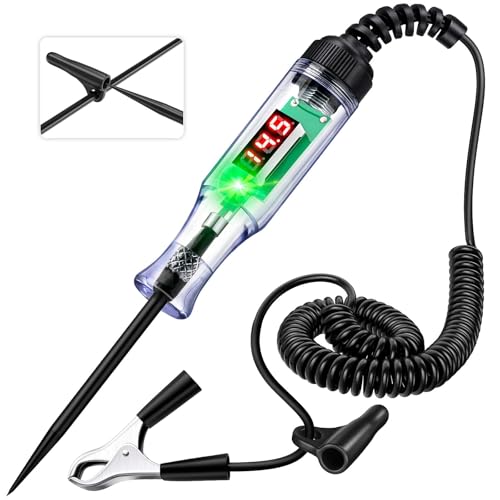
- INSTANT AND ACCURATE VOLTAGE READINGS: This professional digital test...
- AVOID COSTLY CONNECTION ERRORS: Stay safe and protect sensitive...
- BUILT TO SURVIVE THE BUSY WORKSHOPS: This electrical tester boasts a...
JASTIND Heavy Duty 6-24V Automotive Circuit Tester — The Simple, Rugged Backup I Trust
JASTIND Heavy Duty 6-24V Automotive Circuit Tester is the tough, no-frills tool I keep as my backup. I love the sturdy build and the bright indicator that is easy to read in a dim garage. It is a great fit for someone who wants a simple tester that just works.
The trade-off is the narrower 6-24V range, so skip it for higher-voltage systems.

- 【Extra Spring Light Bulb】 : High visibility and strictly tested...
- 【Quality Made Fuse Tester】 : Heavy Duty Construction, large size...
- 【135 Inch PU Spring Cord】 : Portable 135 inch long enough PU...
Conclusion
The one thing to remember is that most of these testers drain their battery because a small internal load never fully shuts off, so pulling the cell between jobs is your simplest fix.
Go pop the battery out of your tester right now and store it in a zip bag in your toolbox — it takes ten seconds and it might be the reason your next job goes smoothly instead of stalling out.
Frequently Asked Questions about Why Does an Automotive Circuit Tester Transmitter Drain its Battery?
How fast does a circuit tester transmitter drain its battery when it sits unused?
A typical transmitter can go flat in two to four weeks of sitting idle, depending on the internal load. That slow pull happens even with the switch off.
I noticed mine died around the three-week mark every time. Once I started pulling the cell out, that problem disappeared completely.
Is it normal for a tester to feel warm or dim after sitting in the toolbox?
Yes, a faint warmth or dim signal after sitting unused is normal for many transmitters. It means a small internal circuit is still drawing current.
That warmth is your clue the load never fully shuts off. In my experience, it is a sign to remove the battery between jobs.
What is the best automotive circuit tester for someone who keeps forgetting to pull the battery?
The best pick is one with a true on-off switch and easy battery access, like the FEAOXYO Heavy Duty 3-48V Digital Automotive Test Light. A real switch cuts the internal load, so forgetting costs you nothing.
I recommend it because the wide 3-48V range covers most cars and trucks, and the digital display stays clear. If you keep forgetting, this is what I grabbed for my own toolbox: the one I stopped losing batteries to.

- 【Wide testing range & Voltage Polarity Testing】3-65v low DC volt...
- 【Computer Safe & Backlight Digital Display Part】Heavy Duty circuit...
- 【Quality Made Tester Body】Professional automotive circuit tester...
Which circuit tester won’t let me down when I’m stuck under the dash at night?
The JASTIND Heavy Duty 6-24V Automotive Circuit Tester is a solid choice because its bright indicator stays easy to read in a dim garage. A simple, rugged build means fewer surprises mid-job.
I keep it as my backup for exactly that reason. The 6-24V range covers most everyday work, so it is the one I sent my brother to buy: what finally worked for late-night jobs.
- 【Extra Spring Light Bulb】 : High visibility and strictly tested...
- 【Quality Made Fuse Tester】 : Heavy Duty Construction, large size...
- 【135 Inch PU Spring Cord】 : Portable 135 inch long enough PU...
Can a weak battery in the tester give false readings?
Yes, a weak cell can make a good circuit look bad or a bad one look fine. The reading drifts as voltage sags under load.
I once chased a “bad ground” that was really just a tired battery. Swap the cell before you trust any reading.
Should I store the battery outside the tester between jobs?
Yes, pulling the battery out between jobs is the simplest way to stop the drain. It costs you ten seconds and saves a whole evening.
I keep my cells in a small zip bag taped inside the toolbox lid. That habit alone has saved me more dead-cell mornings than any upgrade.