
Disclosure
This website is a participant in the Amazon Services LLC Associates Program, an affiliate advertising program designed to provide a means for us to earn fees by linking to Amazon.com and affiliated sites.
Yes. A non-contact digital multimeter is generally safer for presence checks because it senses voltage without touching live conductors, which lowers the risk of shock and accidental contact.
I still treat it as a helper, not a license to skip safety steps. I test the tester on a known live circuit first, then check the wire, and I keep my hands behind the barrier the whole time.
Stop Guessing at Live Wires
Sticking probes into a live outlet is how people get shocked. I have seen folks poke around a switch box with a standard meter and no idea if the power was really off. A non-contact meter lets you check for voltage before you touch anything, so you know it is safe to work.
This is the meter I keep in my own bag for every presence check: Fluke 117 Digital Multimeter Non-Contact Voltage

- VoltAlert technology for non-contact voltage detection
- AutoVolt automatic AC/DC voltage selection. DC millivolts - Range...
- Low input impedance: helps prevent false readings due to ghost voltage

Why Safe Voltage Presence Checks Matter in Real Life
A wrong presence check can hurt someone you love. I learned this the hard way when my dad poked a screwdriver into a switch box to “see if it was live.” He got lucky that day, but the scare stuck with me.
That moment changed how I work around electricity at home. Now I think about my kids walking into a room while I’m mid-repair. One slip near a live wire is all it takes.
What Happens When You Skip a Proper Non-Contact Voltage Test
Most home electrical mistakes don’t announce themselves. You flip a breaker, assume the line is dead, and reach in. A non-contact tester gives you a fast second opinion before your fingers do the checking.
In my experience, the scariest part is how normal everything feels right before something goes wrong. The wire looks dead. The room is quiet.
Then you touch it.
How Safe Presence Checks Protect Your Family and Your Wallet
Safety is the big one, but money matters too. I once bought a cheap tester that beeped on everything, live or not. It gave me false confidence, and I tossed it in a drawer within a week.
Here’s what a reliable check buys you:
- Fewer shocks and close calls during simple repairs
- Confidence to stop and call an electrician when something reads hot
- No wasted cash on tools that cry wolf
Those small wins add up. A calm, careful check beats a rushed guess every single time.
How to Do a Safe Presence Check with a Non-Contact Multimeter
Honestly, the routine I use now is simple and takes under a minute. I run it every single time, even for a quick swap. Skipping steps is how people get hurt.
Steps for a Reliable Non-Contact Voltage Check
First, I test the tester on a circuit I know is live. If it doesn’t beep there, it won’t beep on a dead wire either, so the tool is lying to me.
Then I move to the wire I actually care about. I hold the tip close to the insulation, not the bare copper, and I sweep along the length slowly. A steady beep means stop and treat it as hot.
Common Mistakes That Make Presence Checks Unsafe
I see the same slip-ups over and over, and I’ve made most of them myself:
- Trusting a tester that was never checked on a live line first
- Holding the tip too far away and getting a false “dead” reading
- Relying on a non-contact beep alone before touching anything
A non-contact tester is a first warning, not a final verdict. I always back it up with a contact test before my hands go near the wire.
You lie awake wondering if that switch box is really dead, and one wrong guess could cost you everything. Stop guessing and grab the tester I keep in my own bag for every job, the ones I sent my sister to buy: the ones I sent my sister to buy.

- Smart Digital Multimeter: Thanks to its Smart Auto Mode, TESMEN TM...
- Non-contact: Completely safe Non-Contact Voltage test with a visual...
- Safety Guarantee: CAT II 600V, CE, and RoHS certified. Overload...
What I Look for When Buying a Non-Contact Digital Multimeter
You don’t need the fanciest model on the shelf. You need one that tells the truth and feels safe in your hand.
It Must Prove Itself Before Every Check
A good tester lets you confirm it works before you trust a silent reading. I look for a self-test or a simple way to check it against a known live wire. If you can’t verify it, you can’t trust what it tells you.
Clear Alerts You Can See and Hear
You’ll often be in a dim basement or behind a panel. I want a bright light and a loud beep together, so a weak battery or a quiet room never fools me. In my experience, a tester that only beeps gets ignored fast.
A Comfortable, Safe Reach
Some spots are tight, and you shouldn’t have to stretch your hand near live parts to check them. I look for a slim tip and a body that keeps my fingers well back. A tester that’s awkward to hold is one you’ll skip using.
Simple Controls, No Guesswork
You want to grab it and go, not flip through menus. I favor models with one clear button and an obvious on-off. The easier it is to use, the more often you’ll actually check before you touch.
The Mistake I See People Make With Non-Contact Presence Checks
The biggest mistake is treating a silent tester as proof the wire is dead. A non-contact meter only senses nearby voltage, and it can miss a wire tucked behind metal or buried in a bundle. I wish someone had told me that years ago.
I’ve seen people sweep once, hear nothing, and reach right in. That single quiet reading is not a green light. It just means the tool didn’t pick up a signal from where you were standing.
What to do instead: sweep slowly along the whole length, then confirm with a contact test before touching anything. If you can’t reach a spot safely, stop and call someone who can. Two checks take seconds and beat one guess every time.
You keep second-guessing whether that wire is really dead, and a wrong call could hurt someone you love. Stop guessing and use what I keep in my own bag for every job, the ones I picked up after my dad’s scare: the ones I picked up after my dad’s scare.
- Additional Tips - The following incorrect operations may cause the...
- Versatile Digital Multimeter - Accurately measures AC/DC Voltage, DC...
- Troubleshooting with Accuracy - This Multimeter has a sampling speed...
Check the Tester First and You’ll Never Guess Again
Here’s the tip that changed everything for me: check your tester on a live wire before every single job. It takes five seconds, and it tells you whether the tool can actually warn you. A tester that fails that check is worse than no tester at all.
Why does this matter so much? Because a dead battery or a broken sensor makes a non-contact meter go silent. Silent looks exactly like safe.
I once chased a “dead” circuit for ten minutes before realizing my tester was the problem, not the wiring.
The fix is simple. Touch the tip to a cord or outlet you know is live first and listen for the beep. Then move to the wire you’re checking.
If it beeps on the known live source but stays quiet on your target, you can trust that reading a lot more.
That one habit turned my tester from a gadget I hoped worked into a tool I actually rely on. Try it on your next repair and you’ll feel the difference right away.
My Top Picks for a Safer Non-Contact Presence Check
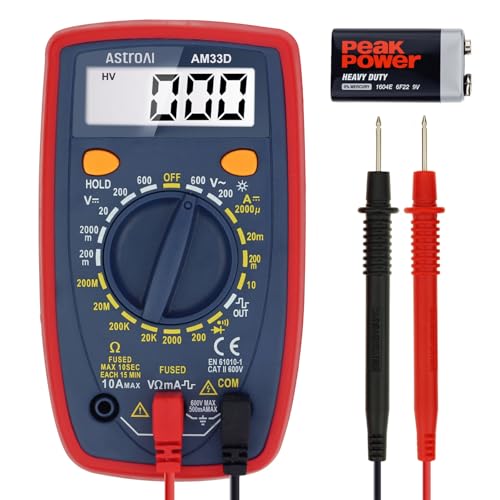
AstroAI Digital Multimeter Tester 2000 Counts Blue — The Simple One I Hand to Beginners
The AstroAI Digital Multimeter Tester 2000 Counts Blue is the one I reach for when someone is just learning. I love how the clear display and straightforward dial make basic voltage checks easy to read. It suits homeowners doing simple repairs.
The trade-off is that 2000 counts is modest for serious electronics work.
- Additional Tips - The following incorrect operations may cause the...
- Versatile Digital Multimeter - Accurately measures AC/DC Voltage, DC...
- Troubleshooting with Accuracy - This Multimeter has a sampling speed...
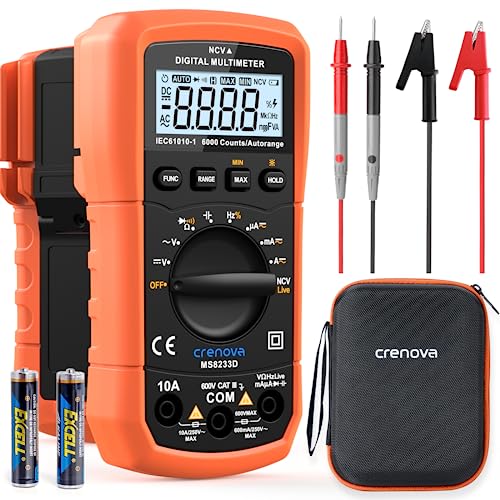
Crenova MS8233D 6000 Counts Digital Multimeter Tester — The One I Grab for Finer Readings
The Crenova MS8233D 6000 Counts Digital Multimeter Tester gives me more detail when I need it. I personally love the higher count range, because small voltage changes show up clearly instead of blurring together. It fits folks who check circuits often and want finer numbers.
The honest catch is that it costs more than a basic starter meter.
- 【More Versatile than Expected】MS8233D multimeter can accurately...
- 【User and Device Protection】The digital multimeter conforms to...
- 【6000-Count LCD Screen】Equipped with a 6000-count (3 5/6 digits...
Conclusion
The one thing to remember is that a non-contact tester warns you, but it never replaces a careful second check before your hands go near a wire.
So grab your tester right now, touch the tip to a known live outlet, and make sure it beeps — those five seconds could be the reason your next repair ends safely.
Frequently Asked Questions about Is a Non-Contact Digital Multimeter Safer for Presence Checks?
Is a non-contact digital multimeter safer than touching wires to test them?
Yes. A non-contact meter senses voltage without touching bare metal, so your hands stay away from live parts. That distance is what lowers the shock risk during a quick presence check.
But safer does not mean foolproof. It can miss voltage hidden behind metal or deep in a bundle, so I always confirm with a contact test before reaching in.
Can a non-contact tester give a false “dead” reading?
Yes, and it happens more often than people think. A weak battery, a tip held too far away, or a wire shielded by conduit can all make a live line look silent.
That is why I test the tester on a known live source first. If it beeps there but stays quiet on my target, I trust the reading much more.
What is the best non-contact digital multimeter for a homeowner who just wants safe, simple checks?
The AstroAI Digital Multimeter Tester 2000 Counts Blue is a solid pick for simple home checks. Its clear display and easy dial make basic voltage readings simple for beginners.
I recommend it to friends who just want to know if a wire is live before they touch it. It is the one I point people to when they ask what to grab first: what I grabbed for my own toolbox.

- Versatile Digital Multimeter - Accurately measures AC/DC Current...
- Thoughtful Design - Support Data Hold, Large LCD Backlit Screen, Auto...
- Suitable For Many Occasions - This Multimeter is a golden partner to...
Which non-contact digital multimeter won’t let me down when I need finer readings?
The Crenova MS8233D 6000 Counts Digital Multimeter Tester gives you 6000 counts, so small voltage changes show up clearly instead of blurring together. That extra detail helps when you check circuits often.
I reach for it when I want precise numbers, not just a yes-or-no beep. It is the one I trust for careful work: what finally worked for me.

- ACCURATE MEASUREMENTS - The AstroAI DM200M multimeter is designed to...
- EASY TO USE - The DM200M Multimeter features data hold, max value...
- ENHANCED SAFETY - There are two ceramic fuses that protect the...
Do I still need to turn off the breaker if I use a non-contact tester?
Yes, always. A non-contact tester is a warning tool, not a substitute for killing power at the panel. I shut the breaker off first, then check.
After the breaker is off, I test the wire to confirm it is dead. Two layers of safety beat one guess every single time.
How close does a non-contact tester need to be to a wire?
It usually needs to be within an inch or so of the insulated wire, but the exact distance varies by model. Too far away and it stays silent even on a live line.
My habit is to sweep slowly along the whole length and watch for a steady beep. If the signal is faint, I move closer and check again.